Festive sale scams in India are a real risk right now. With Diwali shopping and big online sales under way, police and cyber agencies are warning shoppers about fake discounts, fake shopping sites and fake "gift" messages that copy the look of well-known brands. This guide explains how these scams work, the red flags to watch for, and what to do if you have already been tricked.
If you have lost money to an online scam
- Call your bank or card issuer immediately and ask them to block the transaction or card.
- Call the National Cyber Crime Helpline 1930 as soon as possible.
- Report on the National Cyber Crime Reporting Portal: cybercrime.gov.in.
Why Festive Season Is Prime Time for Scammers
During festivals, more people shop online, hunt for discounts and act quickly on offers. Scammers use this rush. A UNI report from October 13, 2026, says consumers have been cautioned about fraudsters who circulate fake discounts and promotional offers in the name of popular e-commerce sale events. These offers are spread through social media advertisements, WhatsApp messages, SMS and emails, and often misuse the names and logos of established shopping platforms. Some lead to fake websites that look like genuine shopping portals.
What Cyber Agencies Are Saying
- I4C awareness drive on fake ads: the Indian Cyber Crime Coordination Centre (I4C) under the Ministry of Home Affairs launched a campaign on October 6, 2026, warning about malicious online advertisements. Officials say such ads can send users to unrelated sites, push them to download harmful apps or lead to fraudulent payment pages. The campaign stresses that a professional-looking ad or a familiar social media platform does not prove that the website, app or payment page is genuine.
- "Be Cyber Street Smart": the Data Security Council of India (DSCI) launched this nationwide campaign for Cyber Security Awareness Month, supported by CERT-In, I4C and MeitY. It targets AI voice clones, malicious APK files, deepfakes and digital-arrest scams.
- Telecom fraud checks: the Department of Telecommunications says its Sanchar Saathi systems have helped prevent more than ₹5,000 crore in suspected cyber-fraud losses.
Common Festive Sale Scams
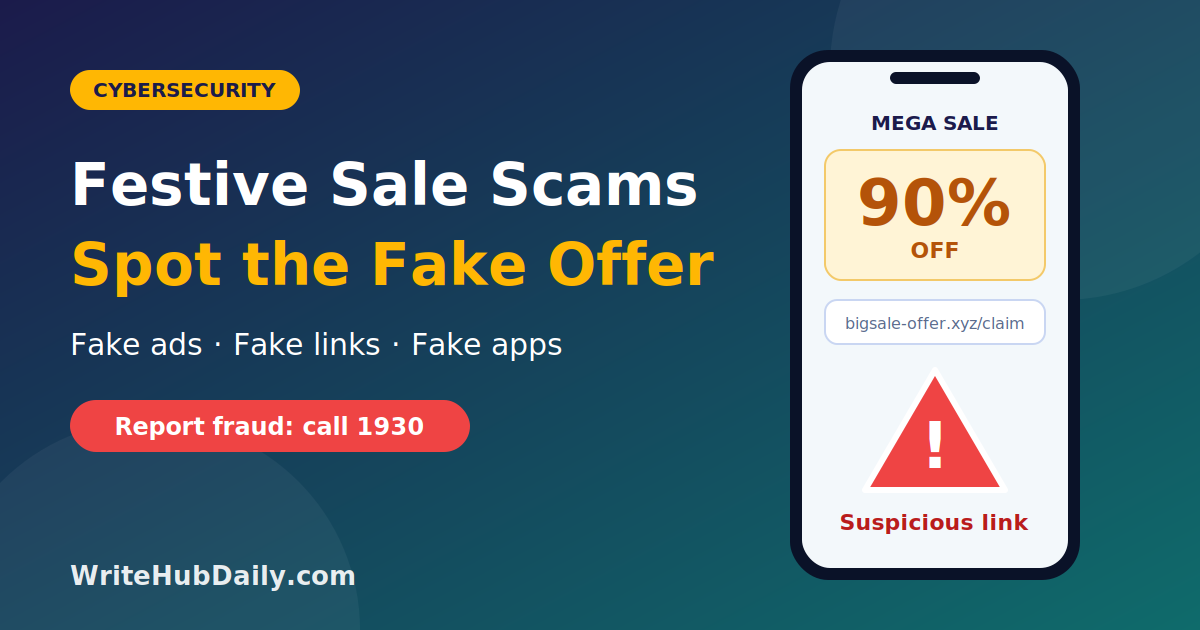
- Fake discount ads: social media ads promise huge price cuts on phones, gadgets or clothes. The link leads to a copycat site that takes your payment and sends nothing.
- Fake shopping websites: the web address is slightly different from the real one, and the site often has no real contact details or return policy.
- Gift and prize messages: a message says you have won a festive gift and asks you to answer a questionnaire or forward the link to friends. CERT-In has warned about this type of campaign in previous festive seasons.
- Malicious APK files: you are asked to install an "offer app" or "delivery tracking app" from a link or file instead of the official app store.
- Fake customer care and refund calls: a "support agent" calls about a failed order, asks you to install a remote-access app or to approve a payment request to get a refund.
- UPI collect and QR tricks: you are told to scan a QR code or approve a request in order to "receive" money. You never need to enter your UPI PIN to receive money.
Red Flags at a Glance
| Red flag | Why it is risky |
|---|---|
| Prices far below the market | Fake sellers use "too good to be true" deals to get quick payments. |
| Pressure such as "only 5 minutes left" | It stops you from checking the site or the seller. |
| Link or app from a message, not the official store | It may be a phishing page or contain malware. |
| Odd website address or spelling | Copycat sites copy the look but change the web address slightly. |
| Request for OTP, PIN, CVV or card details by phone or chat | Genuine companies and banks do not ask for these. |
| Payment only by direct UPI or bank transfer | You lose the protection that comes with trusted payment gateways. |
Safety Checklist Before You Buy
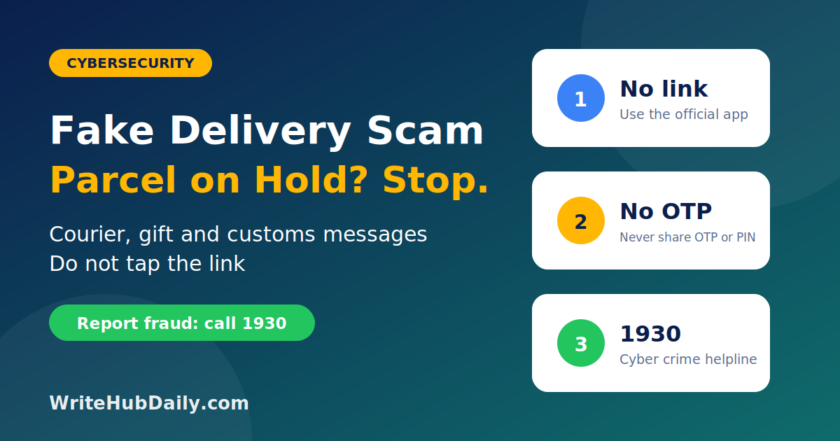
- Open the shopping app or website yourself, instead of tapping a link in a message or ad.
- Check that the web address is correct and that the site shows clear contact details and return policy.
- Install apps only from the official app store, and avoid files shared on WhatsApp or Telegram.
- Never share your OTP, UPI PIN, CVV or passwords with anyone, including "customer support".
- Use a card or payment method with buyer protection, and avoid paying a stranger by direct transfer.
- Turn on transaction alerts, and set sensible UPI and card limits.
- Search for the company's official customer care number on its own website, not through ads or random search results.
- Look at an offer's terms on the official site. If you cannot find the same offer there, treat it as suspicious.
If You Are Scammed: What to Do
- Act fast: call your bank or card issuer and ask them to block the card, UPI ID or transaction.
- Call 1930: the National Cyber Crime Helpline works to help flag and freeze suspicious transfers, and time matters.
- File a complaint on cybercrime.gov.in with screenshots, transaction IDs, phone numbers and links.
- Secure your accounts: change passwords and your UPI PIN, and remove any app you were asked to install.
- Report the ad or profile to the social media platform or shopping site.
A Note for Small Sellers
Festive season also brings fake payment screenshots. Before you hand over goods, check that the money has actually reached your bank or UPI app, instead of trusting a screenshot.
For more on staying safe online, read our guides on how AI is changing online security, India's AI safety rules, deepfakes and privacy and the latest UPI MDR update.
Frequently Asked Questions
What is the cyber crime helpline number in India?
The National Cyber Crime Helpline number is 1930. You can also file a complaint on cybercrime.gov.in.
How can I tell if a shopping website is fake?
Check the web address carefully, look for clear contact details and return policies, and be wary of prices far below the market. If you reached the site through an ad or a message, open the official site or app yourself instead.
Can I get my money back after an online scam?
It is not guaranteed, but acting quickly gives you the best chance. Contact your bank, call 1930 and file a complaint right away.
Is it safe to scan a QR code to receive money?
No. Scanning a QR code or entering your UPI PIN is for sending money, not receiving it. If someone asks you to do this to get a refund, it is a scam.
Conclusion
Festive sale scams work because they combine a tempting deal with urgency. Slow down, go to the official app or site yourself, never share OTPs or PINs, and report fraud quickly if something goes wrong. Cyber Security Awareness Month is a good reminder to share these tips with family members who may be less used to online shopping.
Disclaimer: This article is for general awareness and is not legal or financial advice. Details and campaigns are based on media and government reports published in October 2026. For official information, visit cybercrime.gov.in and CERT-In, or contact your bank.